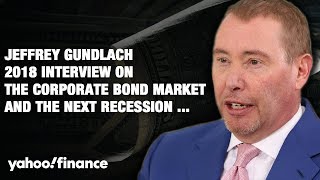
저자: JeffreyGundlach · 외국인
요약 보기
결론: 현재는 경기침체의 필요조건이 아직 충분히 갖춰지지 않았지만, 다음 경기침체 시 회사채 부실과 국가부채 문제로 큰 혼란이 올 수 있다고 경고. [통화정책] 파월 연준의 '인내심(patient)' 발언은 당분간 금리를 손대지 않겠다는 뜻으로 해석. 12월 기자회견의 양적긴축 '자동조종' 발언과 달리 양적완화 재도입을 논의 중이라는 점에서 연준의 방향성이 흐려졌다고 진단. [회사채 리스크] 회사채 시장의 레버리지가 매우 높음. 모건스탠리 분석상 레버리지비율만으로 보면 투자등급 채권의 45%가 정크 등급이 될 수 있음. 경기침체 시 신용등급 하향은 불가피하다고 봄. [국가부채] 2018 회계연도 국가부채가 1.27조 달러 증가. 전쟁비용·재난구호·사회보장기금 대출 등 장부 외 항목 때문에 실제 적자는 공식 발표보다 큼. 침체 시 부채/GDP는 약 4%p 상승, 국가부채 연 성장률은 약 10% 수준 가능성. [만기 도래] 올해 회사채 7천억 달러 만기, 향후 고수익채·은행대출 만기 증가. 재무부의 양적긴축에 따른 국채 발행 확대로 침체 시 장기금리가 하락하지 않을 수도 있음(단기물만 하락 가능). [경기침체 신호] 선행지수 약 5% 성장으로 아직 높음. PMI·소비자심리는 하락 중이나 고점 수준. 실업률은 12개월 이동평균 상회(필요조건 충족), 36개월 이동평균(4.3%)에 접근 중인 현재 4.0%가 핵심 관찰지표. 하이일드 스프레드는 12월 급등 후 회복. 장단기 금리차(2s10s 약 17bp)가 낮고 단기 금리는 향후 연준 움직임이 없을 것으로 반영. [시장 전망] 글로벌 주식시장은 2018년 1월 26일 고점, 미국은 10월까지 버팀. 단기 침체 위험은 과도하게 보지 않되, 향후 장기 구조적 리스크(회사채·국가부채)에 대비해야 한다는 메시지. [출연자 전망] 단기 침체 임박은 아님, 중장기적으로 회사채·국가부채 문제가 다음 침체의 핵심 위험.
다듬은 글
I'm here with Jeffrey gun lock that's right and Jeffrey thank you so much for having us here sure thanks for coming in okay so I want to start with the Fed because Fed chair Powell has continued to reiterate that the Fed was desiring to remain patient and many are interpret that as the Fed is reluctant to hike rates and that they might even ease do you think the markets giving this right that they may in fact actually ease next I'm not so sure that the market has an opinion where the Fed is going to type of ease next or or just I think smart they're gonna stay where they are when the Fed says patient what they mean is I think that they're not going to do anything unless they say something first so patient just means then we communicate something different we're not doing anything with interest rates and that's obviously a massive change from the December press conference that Jay Powell gave after the Fed meeting when he said that quantitative tightening was on autopilot in fact I just read the other day that the Fed admits that they're having discussions about doing quantitative easing again which is radical change from saying that quantitative tightening is on autopilot they're saying that they might are they're discussing they haven't drawn a conclusion yet they're discussing the idea that quantitative easing will be a regular policy tool not one is used only during emergencies or when you're already have gone to the zero interest rate lower bound which suggests that so the market doesn't think the Fed is going to do anything with interest rates they also aren't sure what they're going to do quantitative easing or quantitative tightening so the Fed is kind of I'd say lost its way in terms of having an articulated direction which isn't necessarily bad that's what it used to be but under Alan Greenspan he was famous for saying if you think you understood what I said I wasn't being vague enough right well what certainly has changed as you mentioned and you're someone who's known as someone who always looks at risk you look at various risks so I'm curious what is on your radar right now what are you focused on well I think the biggest risk and it may not materialize for a little while longer is that when the next recession comes there's going to be a lot of turmoil because the corporate bond market is extraordinarily leveraged the ratings of the corporate bond market are very lo there's study by Morgan Stanley research that said that if you use leverage ratios alone and there other variables that the rating agencies use but one most important of course is leverage ratios of a corporation and if you use leverage ratios alone that forty five percent of the investment grade bonds are kit would be rated junk right now right now so if there's a recession obviously these ratings will have to be lowered for now the rating agencies are listening with sympathetic ears to reassuring statements by some large corporations that they're aware that their leverage ratios are kind of high but they plan on addressing that sometime in the next few years if there's a recession it's obvious that the leverage ratios will not be addressed and the ratings will have to go so that's a really big risk also during the next recession we're going to have an extraordinary extraordinary national debt problem because the national debt is growing at a very rapid rate already and we're supposedly if I listen to Larry Kudlow and the president they keep telling me that the best economy ever I know that they know that they're being hyperbolic but it is a growing economy real GDP is three percent year over year or the most recent reading and yet the national debt in fiscal 2018 which ended September 30th was increased by one point two seven trillion dollars now the government tells you that the deficit was a little under eight hundred billion but they're not really telling you the truth because the national debt is the debt and what's missing from the eight hundred to the one point two seven trillion are things like war expenditures that are deemed to be off budget national relief for natural disasters and loans from the Social Security system which obviously are not real I mean that's just one branch of the government funding another branch of the government and that you can't finance yourself so if we're growing at six percent of GDP which is what we're really growing at in terms of national debt during fiscal 18 during a three percent real economy what's the debt going to grow by during a recession well typically the debt to GDP ratio goes up by about four percentage points during a recession so it suggests that the debt to gee the national debt would grow at around a 10 percent annual rate if we go into a normal average type of recession that's obviously a really big problem there's also tons of bonds maturing the corporate bond market has seven hundred billion dollars of bonds maturing this year that's a significant number in future years we're gonna have lots of high-yield bonds and bank loans and of course the Treasury's quantitative tightening program is issuance of bonds that were never floated during the deficits of the past so it's quite possible that during the next recession and I've been talking about this for a while now that what we're used to happening which is oh it's bad economy and so Treasury rates fall maybe that will only happen at the short end maybe long-term interest rates won't fall during the next recession because of the tremendous amount of bonds that will be you know put into the market so I think those are the the things in the longer term there the big wrist and the short term risks sometimes don't really matter it's really what's the big problem I mean I try to go back to it's kind of cornerstone principle when I think about the starting point for asset allocation like back in 2006 the only thing that mattered was you understood there was a credit crisis coming I think this time the only thing that really matters is this problem with the corporate bond market and the national debt issue when the next recession comes and that's really going to trump any kind of short-term movements so the real key I think is to think about that looming problem on the horizon with the next recession I think we're gonna get a question in from New York real quick Julia thanks so much it's Jen Rogers Jeffery I lost count of how many times you said the next recession which brings me to the question of when do you see the next recession coming are there any signals that are you're looking at that are scaring you a little bit more than it was a year ago what was really interesting about entering 2018 was that there was this narrative of a synchronized global expansion that was true everything was really flashing green lights for the economy entering 2018 and yet what's interesting about that when things were flashing green light most people understand that it means it's kind of the end of the game for risk assets the global stock market peaked January 26th of 2018 u.s.
hung on until October but the global stock market peaked January 26 of 2018 entering 2019 there was a narrative developing that is also true of some synchronized global slowdown yet the indicators that we look at for a recession are not even flashing fully yellow yet it's more of a yellowish green right now we look at things like the leading economic indicators kind of the granddaddy of them all that's put out by the conference bureau that year-over-year always has gone negative before the front end of a recession and while it's weakening from a very high level it's still pretty high at around five percent year-over-year and the stock market being up in the last couple of months means that probably the leading in hairs will hang in there what is signaling recession a little bit more our sentiment surveys the PMI surveys typically collapse in a very observable way before the front end of recession comes they are collapsing sort of right now but they're still at high levels consumer sentiment same sort of a thing unemployment rate is starting flash yellow a little bit unemployment claims the report every Thursday have bottomed out and appeared to be in a rising trend and the unemployment rate now is above its 12 month moving average the unemployment rate and that's a necessary condition to be talking about potential recession what would really be a major indicator would be if the unemployment rate would go above its 36 month moving average which right now rests at 4.3 percent unemployment rate right now is at 4.0 so it's not terribly far away from that moving average we have to watch that very carefully because if that cracks above then I think we would say that we're starting to flash yellow for recession another indicator that's very important our junk bond spreads junk bond spreads in the last before last two recessions really blew out by several hundred basis points before the front of the recession came we had a scare on that during December just like the stock market went down 20% plus and most of the indices but the rebound has been all the way back to the breakdown point so high yield spreads are starting to look a little less scary so just to look for a recession in the very near term I think you have to look very hard and look with a jaundiced eye I think right now it's too early to say that we have the necessary conditions in place for a recession on the foreseeable horizon which is good news but the bad part of that news is a foreseeable horizon is typically no longer than six months usually more like four to six months so for now that seems to be okay also lastly the yield curve that got a lot of play you know the twos tends yield curve is about 17 basis points that's pretty low that's a little bit of a concern and there is no yield curve at all from basically LIBOR out to the five-year Treasury you're all at about two and a half percent that suggests that the market is looking for no movement from the Fed frankly for years to come I'm sure that won't be the case but that's the message from the mathematics of the yield curve right now




댓글 0